You’re worried about AI replacing you. Good. You should be. But here’s what nobody’s telling you: the threat isn’t AI itself. It’s your refusal to pick up the tool while everyone else already has.
The gap between what AI can do and what you can do is already wide. It’s getting wider. And if your strategy is to ignore it, outwork it, or wait for it to slow down, you’ve already lost.
This is not a prediction. This is the current state.
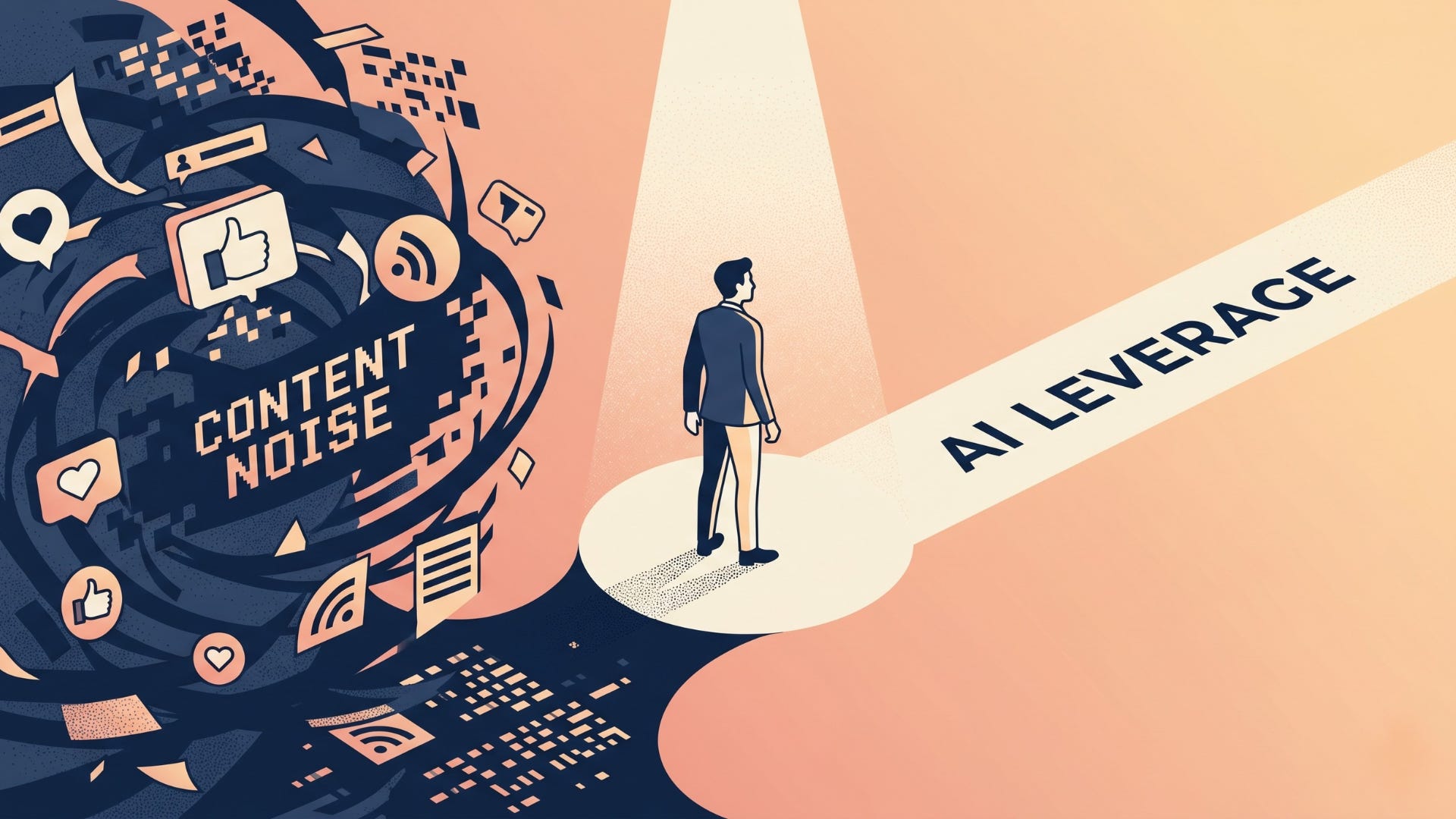
The Gap Is Already Too Wide to Close
GPT-4 scored in the 90th percentile on the Uniform Bar Exam. The average human lawyer sits at the 50th percentile by definition. That’s not a close race. That’s a blowout.
In medical diagnostics, AI systems are detecting breast cancer from mammograms with 94.5% accuracy compared to 88% for trained radiologists. These aren’t fringe experiments. These are peer-reviewed, published results from institutions like Google Health and DeepMind.
Here’s the part that should terrify you: AI can be trained on datasets equivalent to millions of human-years of experience in days or weeks. You spent years becoming good at what you do. AI spent a weekend.
Humans improve linearly. We get better with experience, but there’s a ceiling. We forget. We get tired. We plateau. AI compounds. It processes faster, learns from exponentially more examples, and doesn’t need sleep. The gap isn’t closing. It’s accelerating.
This is the uncomfortable truth most people refuse to accept: AI is better than you at most cognitive tasks already. Pattern recognition, data analysis, content generation, coding, legal research, and diagnostic interpretation. The list grows every quarter.
And yet, people still say “AI is just a tool.” Yes. It is. But it’s a tool that outperforms you on the tasks you spent your career mastering. Recognising that is step one.
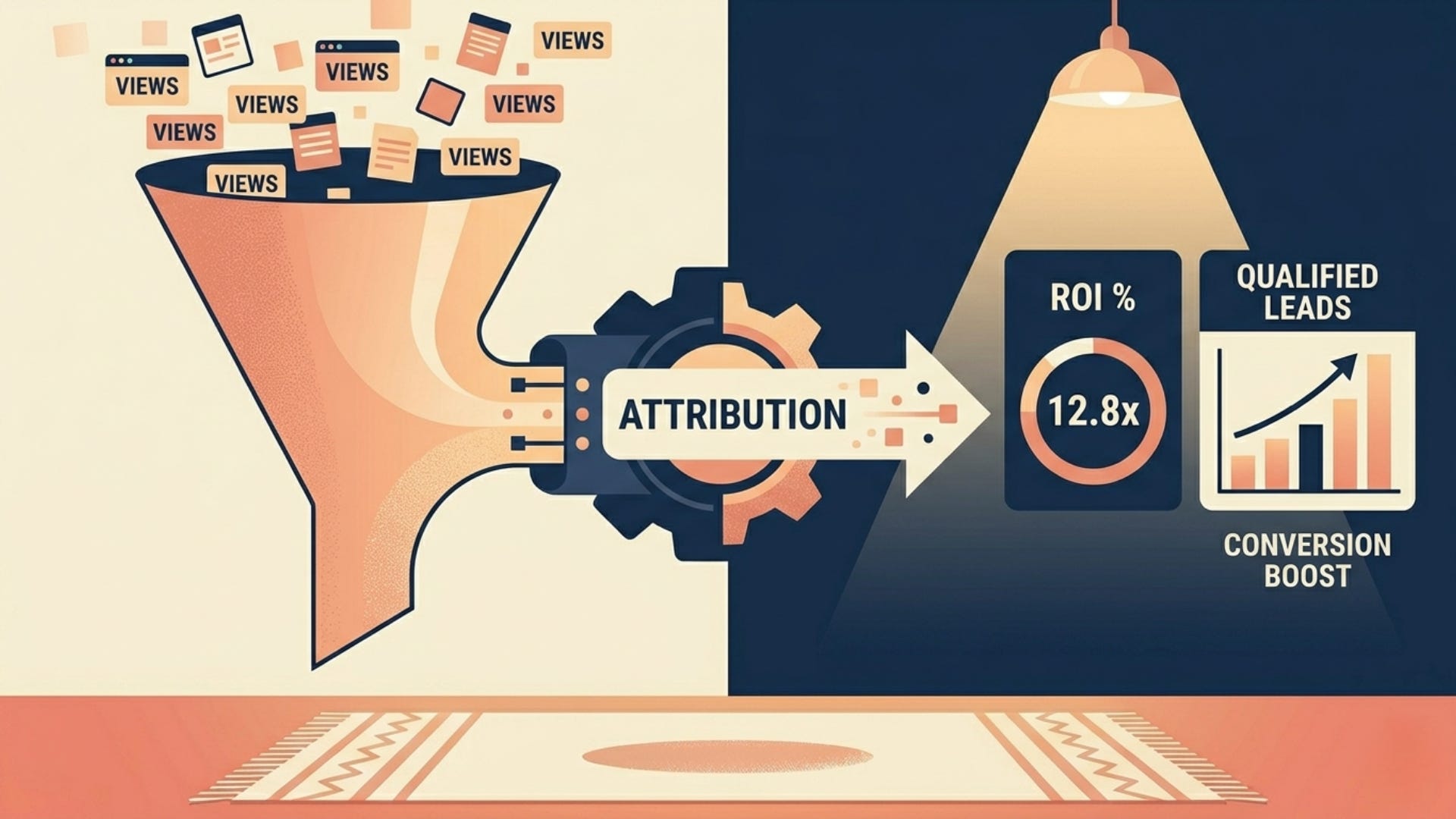
The People Getting Replaced Are Not the Untalented Ones
72% of executives say their companies are adopting AI. That sounds impressive until you see the next number: only 11% report seeing significant financial returns. The gap between trying and succeeding is massive. And that gap is where careers get redefined.
The people losing ground aren’t untalented. They’re smart. Experienced. Credentialed. They had every advantage except one: willingness to evolve.
Companies that successfully integrate AI see 3-5x productivity gains in knowledge work compared to non-adopters. This isn’t a gradual advantage. It’s a winner-take-most dynamic. Your competitor adopted AI six months ago. They’re now producing five times more output at the same cost. You’re still doing it the old way because “it works.”
It works until it doesn’t. And by then, you’re too far behind to catch up.
The Real Threat Is Stubbornness, Not Stupidity
Goldman Sachs estimates 300 million full-time jobs globally could be affected by AI automation. But here’s what that stat actually means: jobs aren’t being eliminated. They’re being restructured around AI-augmented workflows.
The accountant who refuses to use AI for data analysis loses to the accountant who uses AI to handle the grunt work and focuses on strategic financial planning. The writer who won’t touch AI loses to the writer who uses AI to draft, then applies human judgement to refine and elevate. The consultant who manually builds slide decks loses to the consultant who uses AI to generate frameworks and spends their energy on client strategy.
Same role. Different outcomes. The differentiator? One person picked up the tool. The other didn’t.
You can be brilliant at your job and still get left behind. Not because you weren’t good enough. Because you refused to get better.
Your Edge Is Not What You Think It Is
Let’s get something straight: your edge is not raw intelligence. It’s not memory. It’s not speed. It’s not even creativity. AI is catching up on all of these. In some cases, it’s already ahead.
Your edge is something AI still can’t touch: problem framing, contextual judgement, and knowing which problems are worth solving in the first place.
In a study by BCG and Harvard Business School, consultants using AI were 40% more productive and produced 40% higher quality work than consultants working without AI. But here’s the critical finding: AI alone performed worse than humans alone. The multiplier effect only appeared when humans and AI worked together.
AI gives you answers. You need to ask the right questions.
The people who win are the ones who understand this distinction. AI can generate a hundred options in seconds. It can analyse datasets you couldn’t process in a year. It can write, code, design, and iterate faster than any human ever will. But it can’t tell you which option actually solves your customer’s problem. It can’t factor in the organisational politics that will kill a technically perfect solution. It can’t sense when a strategy is right on paper but wrong for the moment.
That’s your edge. And if you’re wasting that edge on tasks AI handles better, you’re not being strategic. You’re being stubborn.
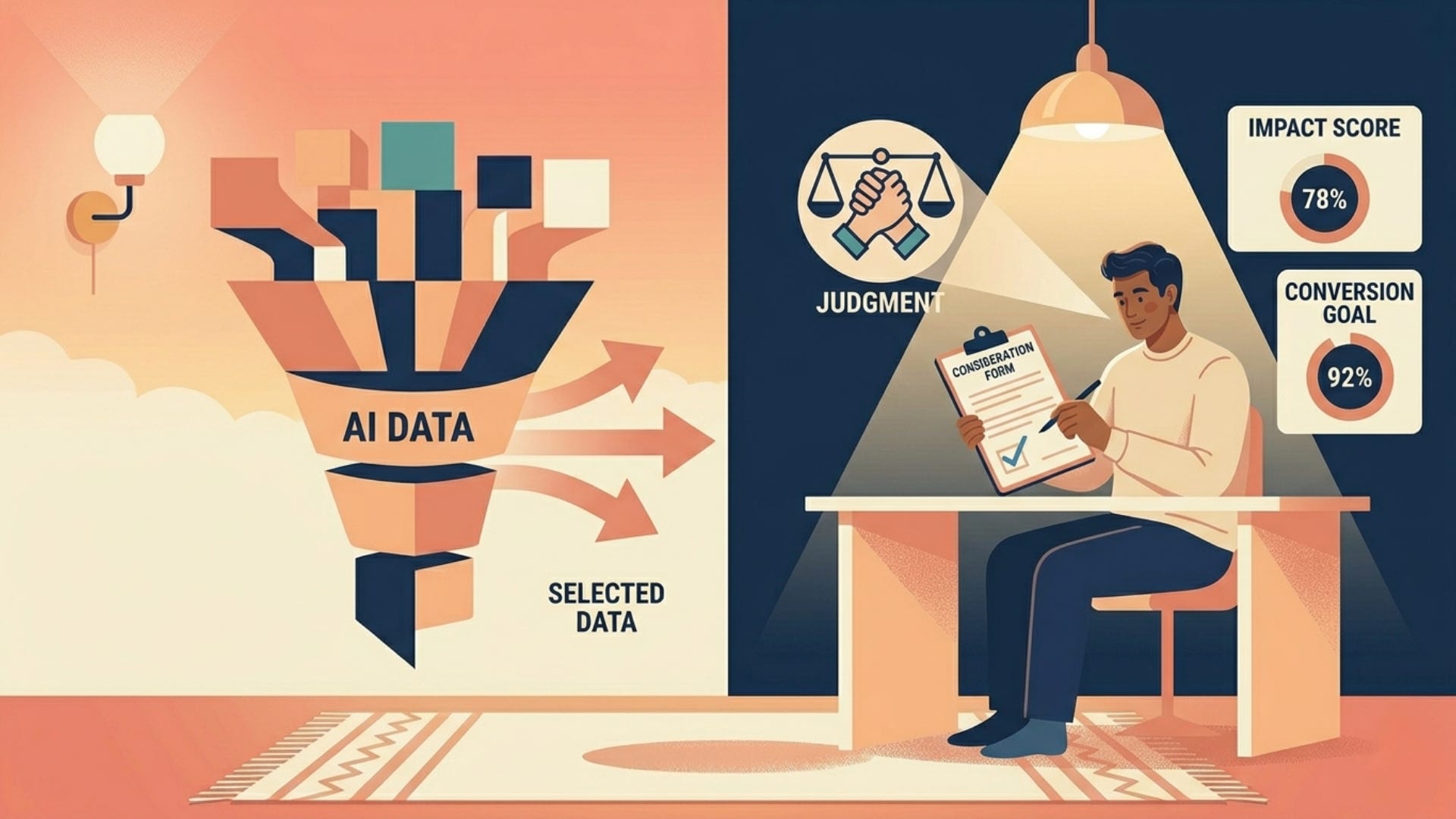
AI Gives You the Answers. You Need to Ask the Right Questions.
64% of C-suite executives say AI’s biggest value is augmenting human decision-making, not replacing it. The executives who get this are doubling down on judgement, strategic thinking, and high-stakes decision-making. They’re offloading everything else.
Knowledge workers using AI report spending 30-50% less time on routine tasks, freeing capacity for strategic work. That’s not a marginal gain. That’s a fundamental reallocation of where human effort goes.
If you’re spending hours on work AI can do in minutes, you’re not hustling. You’re wasting your time. And wasting your time is the one thing you can’t afford.
How to Actually Become Irreplaceable
This is not “learn to code” advice. This is strategy.
Master the Skill of Wielding AI, Not Competing With It
Users skilled in prompt engineering get 2-3x better outputs from the same AI model compared to novice users. Think about that. Same tool. Same task. Radically different results based purely on how well you direct it.
Learning to orchestrate AI effectively makes you a force multiplier. The person who can get the best output from AI tools becomes exponentially more valuable than the person who refuses to touch them.
And the market knows it. Job postings requiring AI skills command 21% higher salaries on average than equivalent roles without AI requirements. The premium isn’t for people who can do the work. It’s for people who can do the work 10x faster by wielding AI.
Double Down on Judgement and Problem-Solving
AI can generate a hundred options. Your job is to pick the right one. That requires experience, context, and critical thinking. It requires understanding not just what works technically, but what works for this client, in this market, at this moment.
This is where your years of experience actually matter. Not in executing the task. In knowing which task is worth executing.
Stop Doing Work AI Can Do Better
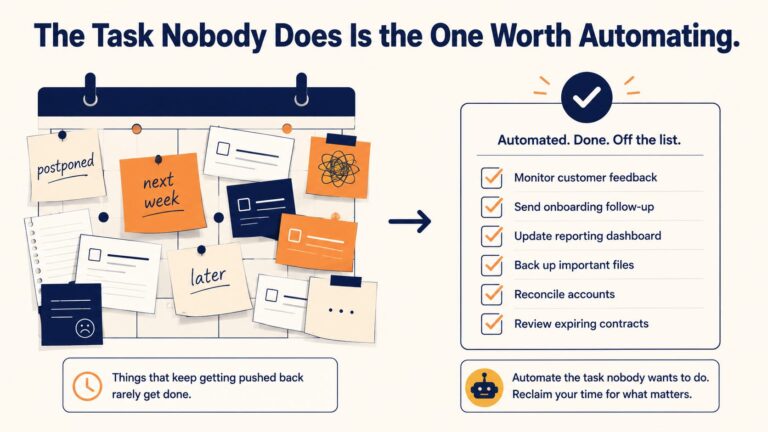
Audit your workflow. Be honest. How much of what you do could AI handle at the same quality or better? Offload it.
Protect your energy for the work that actually requires you. The high-stakes conversations. The strategic pivots. The decisions where context and judgement are everything.
Spending hours on tasks AI handles in seconds is not hustle. It’s waste. And if you’re wasting your capacity on low-value work, you have nothing left for the work that matters.
The Only Losing Move Is Standing Still
Here’s the reality: only 24% of small and medium businesses have integrated AI into workflows, compared to 65% of enterprise companies. That’s a massive opportunity gap.
While larger companies drown in hierarchy, process, and risk aversion, smaller businesses that move fast can leapfrog them. But only if they actually move.
58% of workers express concern about AI, but only 12% have actively experimented with it. Fear outweighs action by nearly 5 to 1. That ratio is your advantage. While most people worry and wait, you can act and learn.
AI is not the enemy. Your refusal to adapt is. The future belongs to people who accept reality, pick up the tool, and use it to make their unique human strengths 10x more powerful.
Comfort is the real killer. Not AI. Not disruption. Complacency.
The businesses crying about AI taking over had every opportunity to adapt. They chose not to. The professionals losing ground to AI-augmented competitors had access to the same tools. They refused to learn.
The world doesn’t care about your reasons. It only cares about results. And right now, the people delivering results are the ones who stopped fighting the tool and started wielding it.
You have a choice. You can keep doing things the way you’ve always done them and hope the gap doesn’t swallow you. Or you can accept that the game has changed, learn the new rules, and become irreplaceable.
The only losing move is standing still.
Ready to Stop Wasting Time?
If you’re an SMB owner staring at this AI shift and wondering where to even start, you’re not alone. Most businesses know they need to move but don’t know which direction to move in.
I help small and medium businesses figure out where AI actually makes sense for their operations, which tools are worth adopting, and how to restructure workflows so your team isn’t just busy—they’re effective.
This isn’t about chasing every shiny new tool. It’s about identifying the high-impact opportunities, eliminating low-value work, and freeing your people to focus on what actually drives results.
Let’s talk. Reach out at email@josephchoi, and we’ll figure out where your edge is—and how to sharpen it.