A company recently pitched an automated content engine to me that takes one YouTube video and turns it into daily shorts across multiple channels. On paper, it looked impressive. The sample clips had views. They had likes. What they did not have was real audience response. There were almost no meaningful comments, almost no visible conversation, and no clear sign that anyone actually cared. That is the whole problem with a lot of AI content automation right now: it is getting very good at manufacturing activity and still terrible at proving value.

The market is already telling us this. Wyzowl reports that 91% of businesses use video as a marketing tool and 93% of video marketers say video is an important part of their strategy. HubSpot also found that 17.13% of marketers plan to invest more in short-form video in 2025, making it the top format for new investment. The volume is exploding. But volume is not the same thing as usefulness. If everyone can produce more clips, then more clips stop being an advantage. The advantage shifts to content that creates trust, conversation, and business movement.
That is the line most teams still miss. It is easy to automate something. It is hard to automate something useful. AI is not the problem. Low standards are. If you use AI to speed up research, tighten editing, repurpose a strong idea thoughtfully, or improve distribution, that is leverage. If you use AI to flood feeds with interchangeable junk and then point at view counts like they mean something, that is just efficient failure.
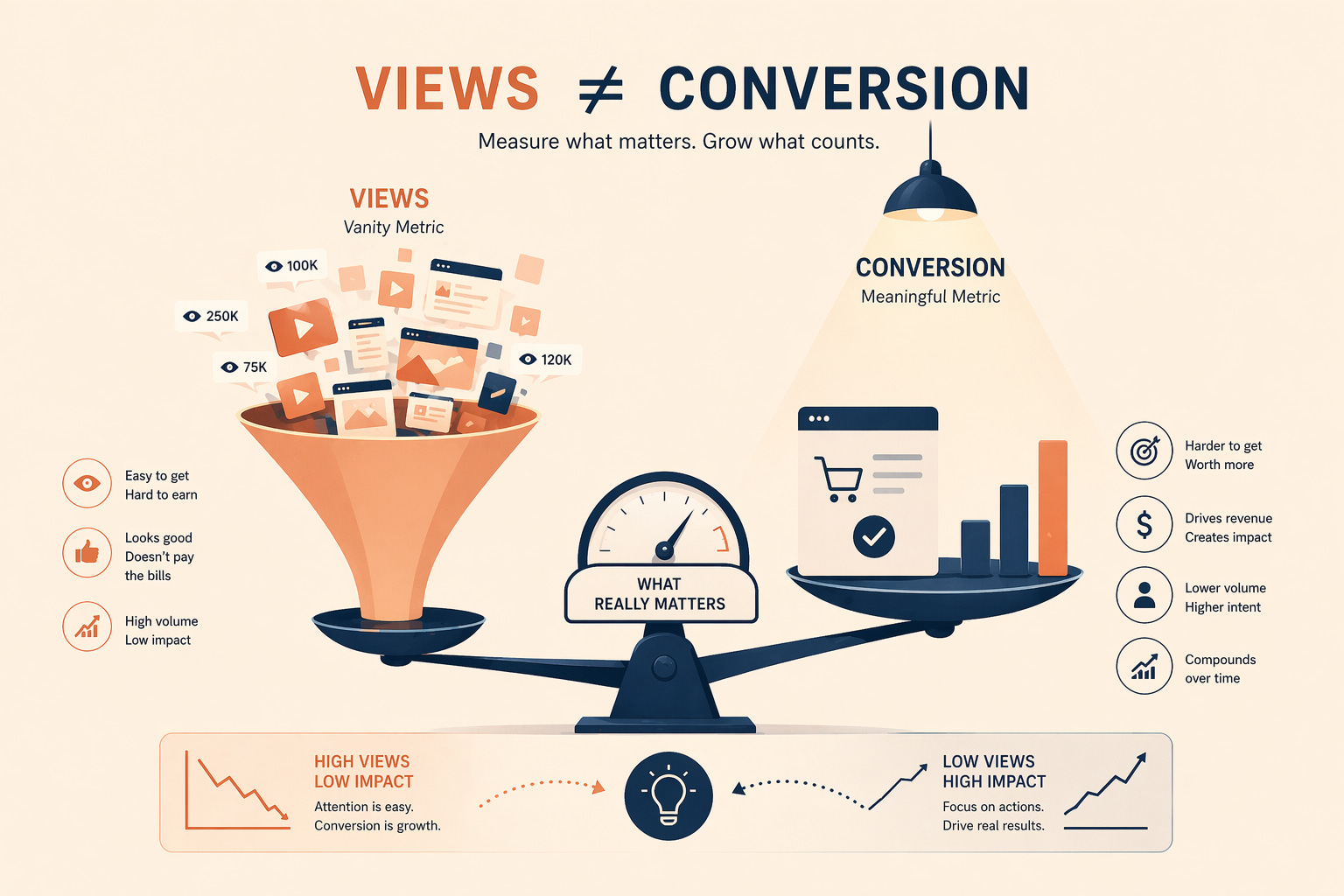
Most teams are measuring the easiest numbers, not the right ones
One of the clearest signs of weak content strategy is an obsession with the metrics that show up first. Wistia found that 63% of video marketers measure video ROI using views. VidCo data cited by HubSpot shows 74% of companies measure video ROI using engagement metrics like views, view rate, and average watch time, while only 48% use conversion rates. That gap matters. It tells you a lot of teams are still rewarding distribution signals before they confirm whether the content actually changed buyer behaviour.
This is how bad decisions get dressed up as progress. A clip can get lightweight engagement because it was short, well-timed, or fed by platform distribution. None of that proves the content was useful. If the audience does not comment, save, share, click, reply, inquire, or convert, then the content may have created a momentary signal but not a durable asset. A view is a glance. It is not trust. It is not consideration. It is not demand.
Wistia’s numbers make that even harder to ignore. Email capture forms on videos converted at 23%, compared with 13% for CTAs and only 1% for annotation links. Meanwhile, the most popular add-on was not the best-performing one. That is the whole vanity-metric trap in one dataset. Teams keep choosing what looks active instead of what produces an outcome. If your content system optimizes for surface motion instead of commercial movement, AI just helps you make that mistake faster.

The internet does not need more content, it needs more signal
The case for brute-force content production falls apart even faster when you look at the wider content market. Content Marketing Institute’s 2025 benchmark report found that only 29% of B2B marketers say their content strategy is extremely or very effective. A much larger 58% rate it as only moderately effective, and 42% of underperformers say the problem is a lack of clear goals. Even worse, only about one in three say they have a scalable model for content creation.
That should kill the fantasy that more automation automatically creates better marketing. It does not. Most teams do not have a strategy problem because they lack output. They have a strategy problem because they lack clarity. They do not know what the content is supposed to do, who it is supposed to move, or how success should be measured. So they compensate with volume. Then they wonder why nothing compounds.
CMI also found that 55% of B2B marketers struggle to create content that prompts a desired action. That is the stat that matters here. The problem is not publishing. The problem is impact. If AI helps you publish ten times faster but your content still does not trigger action, you did not build a growth engine. You built a louder version of the same broken machine.
This is where Joseph’s filter matters: do shit that matters. Useful content does at least one of four things. It teaches something the buyer can actually use. It sharpens the buyer’s understanding of a problem. It creates trust in the operator behind the message. Or it moves the relationship forward in some measurable way. If it does none of those things, automating it is not smart. It is lazy.
AI is best at compression, not judgment
The strongest argument for AI in content is efficiency, not autonomy. Wistia found that only 18% of businesses currently use AI in video production workflows, but 66% want to use it more. The most common use cases are practical: 59% use it for captions and transcripts, 50% use it for scripts, outlines, or brainstorming, and others use it to identify clips or generate promo copy. That is exactly where AI shines, it compresses labour around work that already deserves to exist.
That is a completely different use case from feeding one mediocre long-form asset into a machine and spraying thirty short clips across every channel you have. One approach improves the economics of meaningful work. The other industrializes low-value output. You should want more of the first and a lot less of the second.
Semrush found that 67% of small business owners and marketers use AI for content marketing or SEO, and 68% say AI has increased their content marketing ROI. Fine. That supports the pro-AI case. But even those numbers do not justify content sludge. They support using AI where it improves quality, speed, and decision-making. They do not support replacing editorial judgment with a content blender.
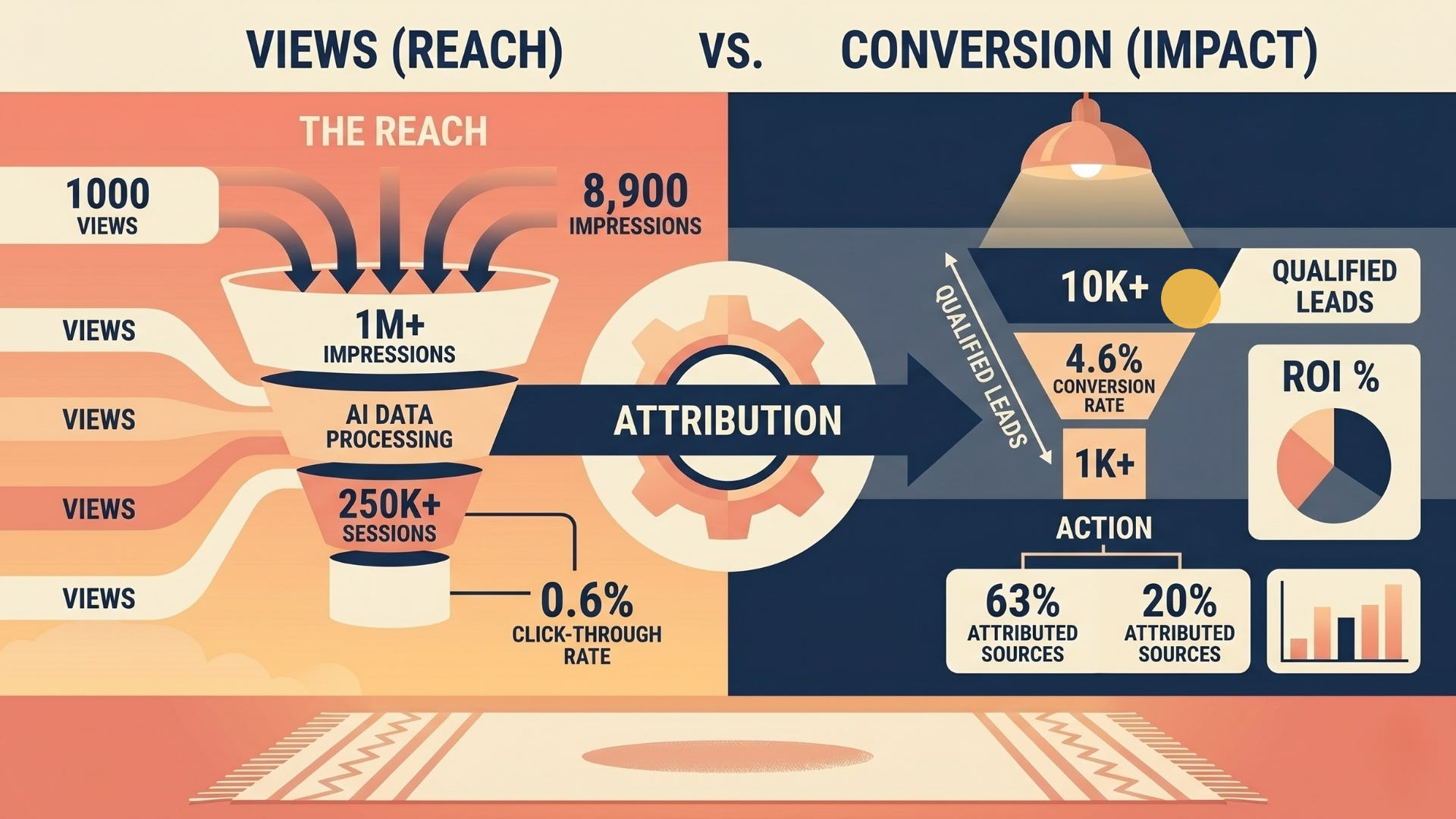
If nobody talks back, your content probably did not land
The automation pitch Joseph saw had exactly this problem. The clips had activity, but not interaction that felt alive. That matters because real engagement is harder to fake and usually more diagnostic than reach. Sprout Social’s 2025 Index surveyed more than 4,000 consumers and found that people want brands to understand context, not just chase every trend. In separate customer care data, Sprout notes that over half of consumers say the most memorable brands on social are the ones that respond to customers. That is not a side note. That is the market telling you that reciprocity matters.
Useful content creates some form of response loop. It earns comments with substance. It gets forwarded to colleagues. It prompts questions. It drives replies in DMs or email. It gives the audience a reason to think, “These people get it.” Slop does not do that. Slop gets consumed the same way background noise gets heard, briefly and without consequence.
There is also a trust problem coming. Sprout’s broader market data says social platforms now drive over 60% of product discovery in aggregate, while people are becoming more selective about what they engage with. When distribution environments get noisier, the premium on credible signal rises. That means every low-value AI clip you publish does not just risk being ignored. It can actively train the audience to ignore you.
That is the part people underestimate. Bad content is not neutral. Repeated low-value output teaches the market that your brand is not worth attention. It degrades your positioning by making you look automated in the worst possible way: fast, loud, and forgettable.
What useful AI content operations actually look like
If you want to use AI properly, start with the work that already matters. HubSpot cites Wistia data showing that educational and instructional videos were among the most engaging formats businesses produced, and that high production budgets were not the deciding factor. That should be freeing. You do not need a giant media factory. You need a sharper point of view and better operational discipline.
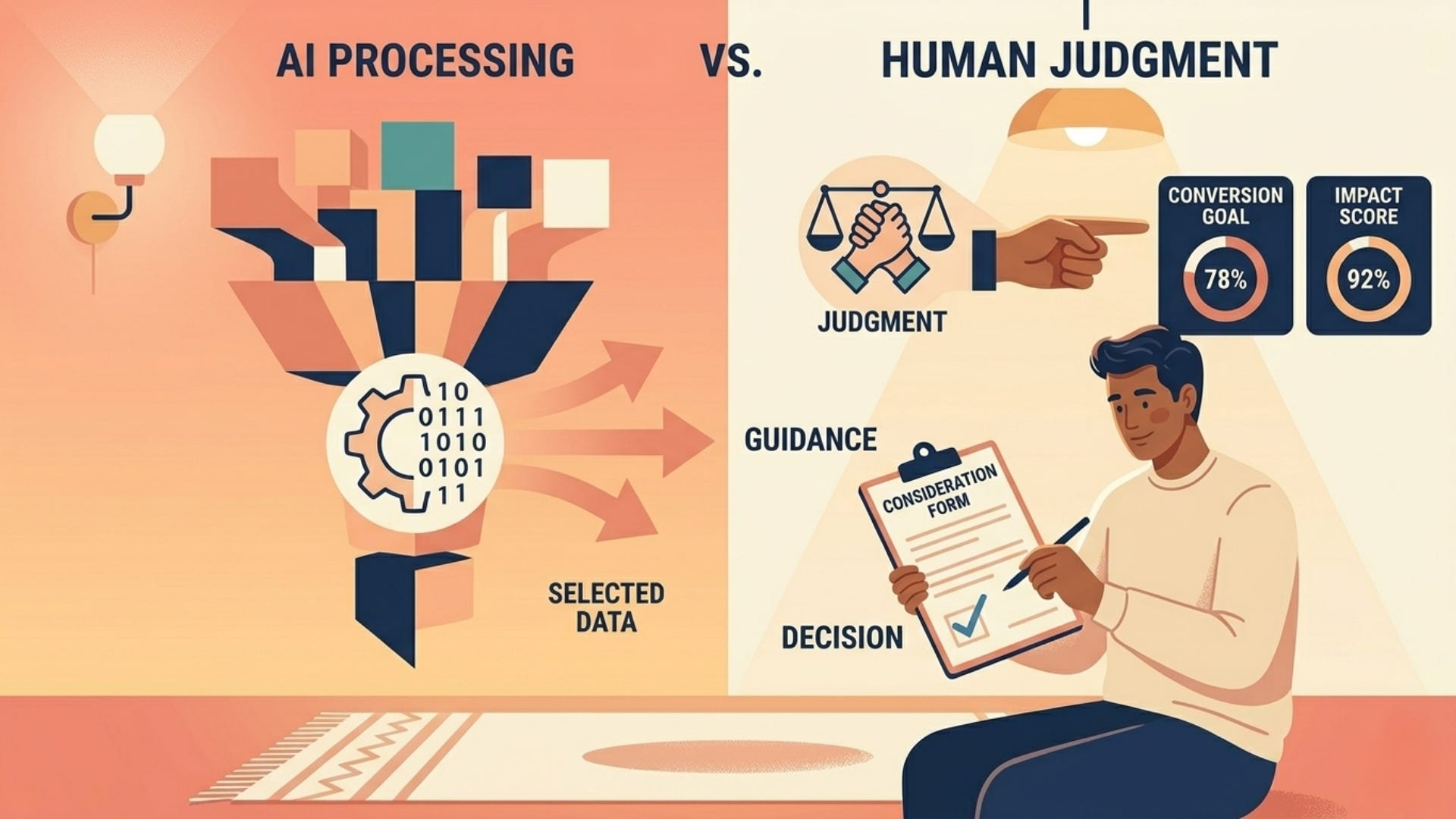
A useful AI content workflow usually looks boring, and that is a good thing. Use AI to extract transcripts, pull key themes, cluster audience questions, draft first-pass outlines, generate caption options, identify reusable clips, and speed up editing. Then have a human decide what is actually worth publishing, what needs context, what needs stronger claims, and what should be killed entirely.
That last part is the one weak teams avoid. They want AI to remove judgment because judgment is hard. But judgment is where the value lives. The machine can compress labour. It cannot tell you whether an idea is strategically necessary, whether a claim is persuasive, whether a story builds credibility, or whether a clip is just another disposable piece of feed filler. That is still your job.
The companies that win with AI will not be the ones producing the most content. They will be the ones with the best kill rate, the best taste, and the clearest link between content and business outcomes. AI helps when it sharpens signal. It hurts when it multiplies noise.
Use one brutal filter before you publish anything
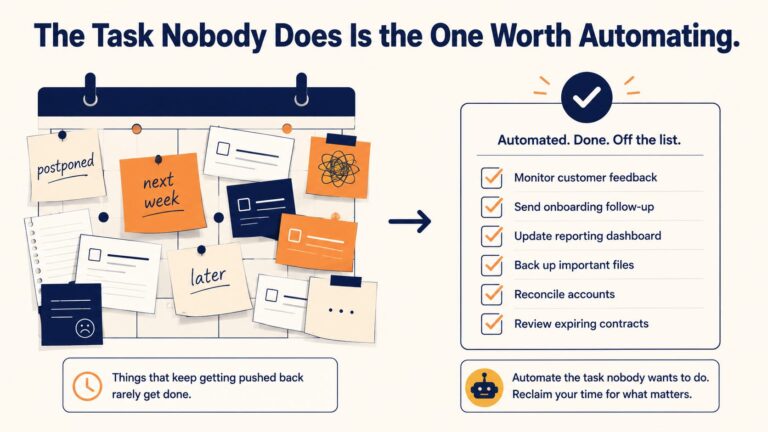
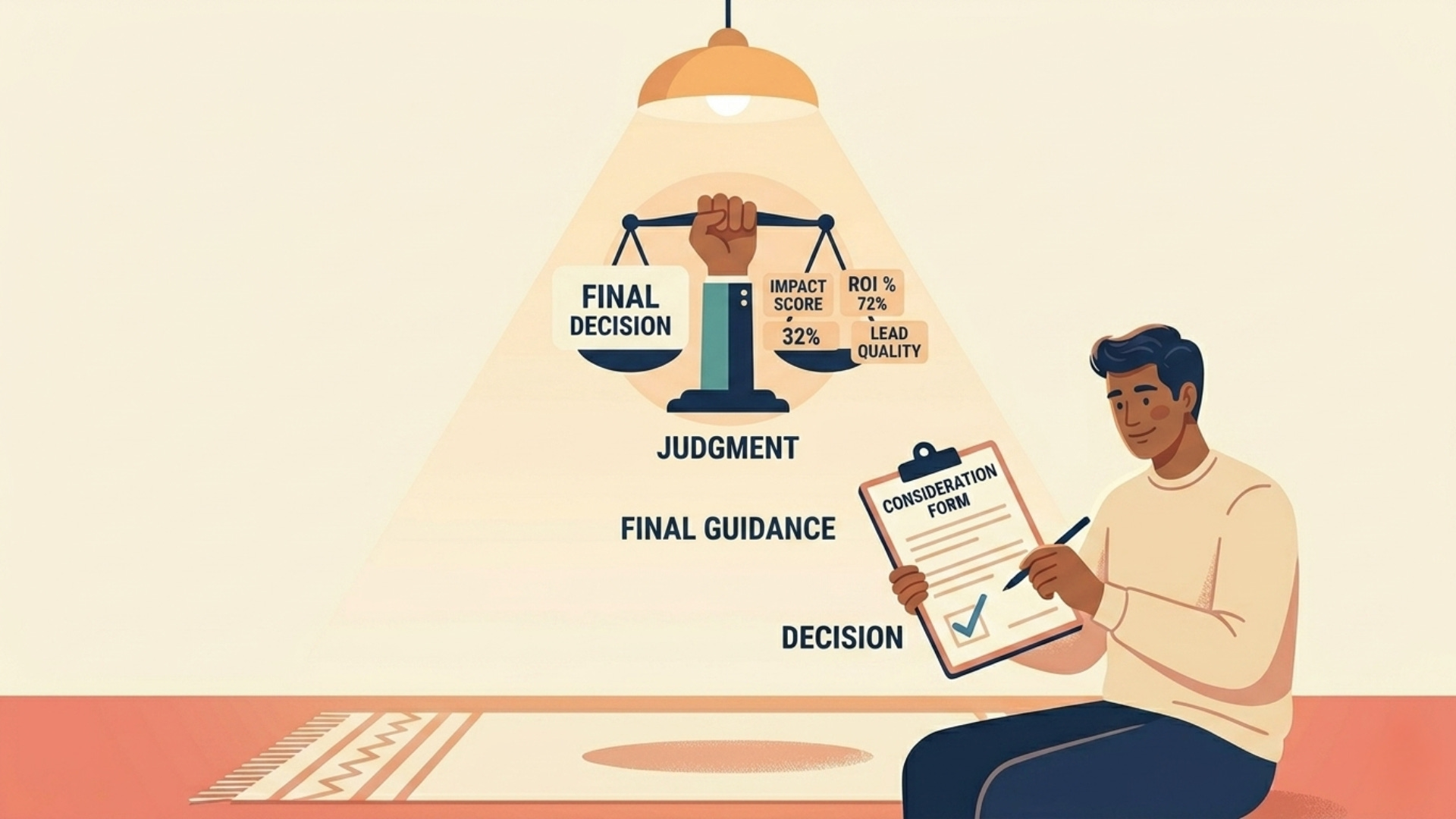
Before your team publishes another AI-generated clip, ask one question: what useful result is this supposed to create? Not what metric it might inflate. Not which channel it fills. Not whether the software can produce it. What useful result is it supposed to create?
If the answer is weak, the content is weak. If the strategy is “more posts,” the strategy is weak. If the only proof you have is views and likes from a clip nobody cared enough to discuss, the content did not work in any serious sense.
AI should help you move faster on work that deserves speed. It should help you tighten a message, scale a strong idea, and remove friction from production. It should not become an excuse to flood your audience with synthetic busyness. Views are cheap. Useful content is not. That is why useful content still wins.
If your business is trying to figure out where AI fits in your marketing without turning your channels into noise, I help SMBs build practical AI and content strategies that focus on work with real upside. Reach out through [email protected] if you want to identify the gaps worth fixing and stop wasting time on output that only looks productive.