AI process automation does not fix messy operations. It exposes them. That is the uncomfortable part most businesses want to skip. They want the tool, the dashboard, the chatbot, the workflow agent, the magic. What they often do not have is a clear written answer to a basic question: how does this work actually get done?
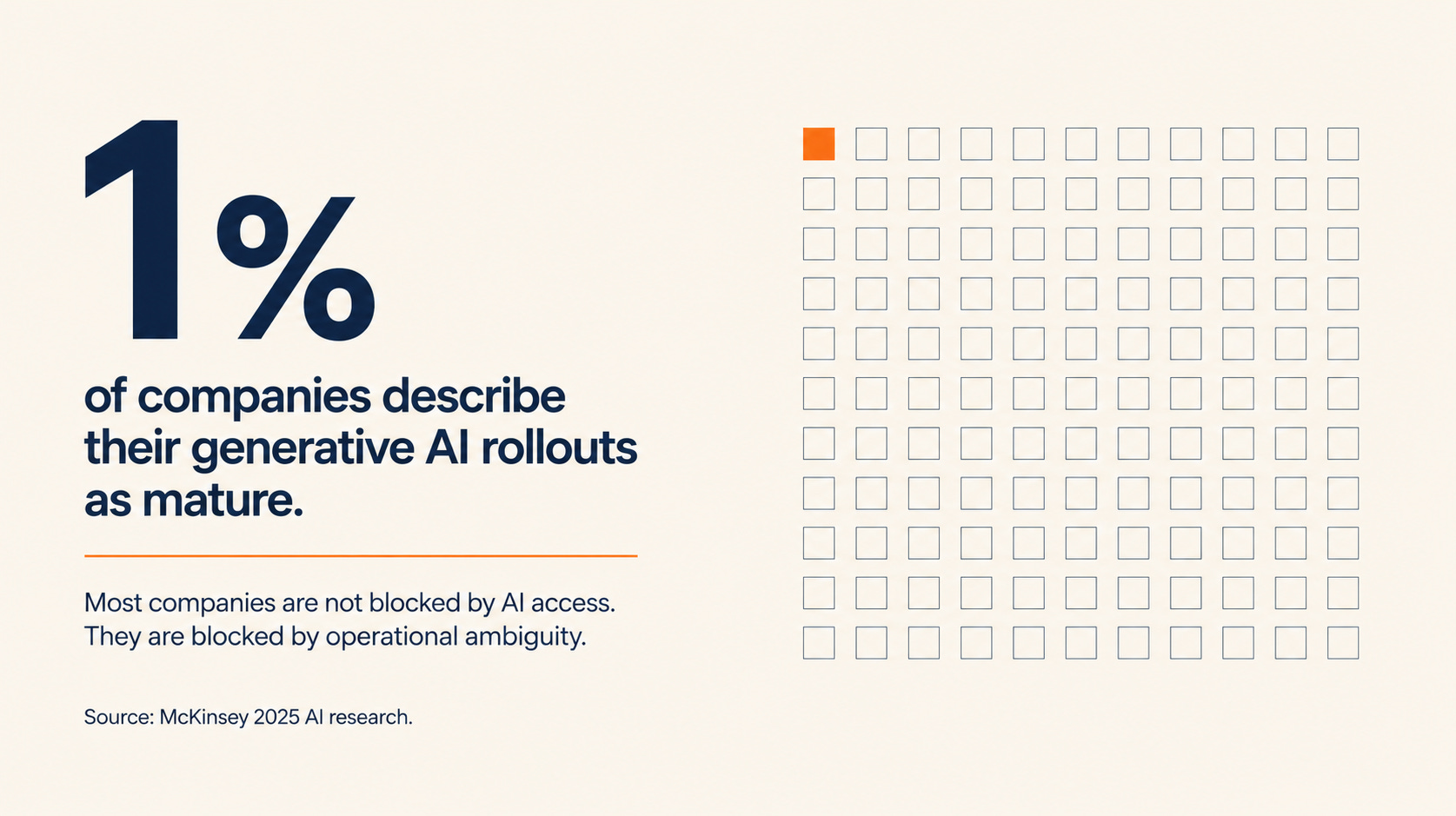
That gap matters. McKinsey reported in 2025 that only 1 percent of companies describe their generative AI rollouts as mature. The problem is not that every business bought the wrong model. The problem is that many businesses are trying to automate work they have never properly defined.
If a process lives in someone’s head, changes depending on who is working that day, or depends on Slack archaeology and heroic follow-ups, AI will not rescue it. It will just move the confusion faster.
AI Exposes Broken Operations Faster Than It Fixes Them
McKinsey’s 2025 AI research found that nearly all companies are investing in AI, but only 1 percent say they have reached maturity. That gap is the entire argument. Most companies are not blocked by a lack of excitement. They are blocked by operational ambiguity.
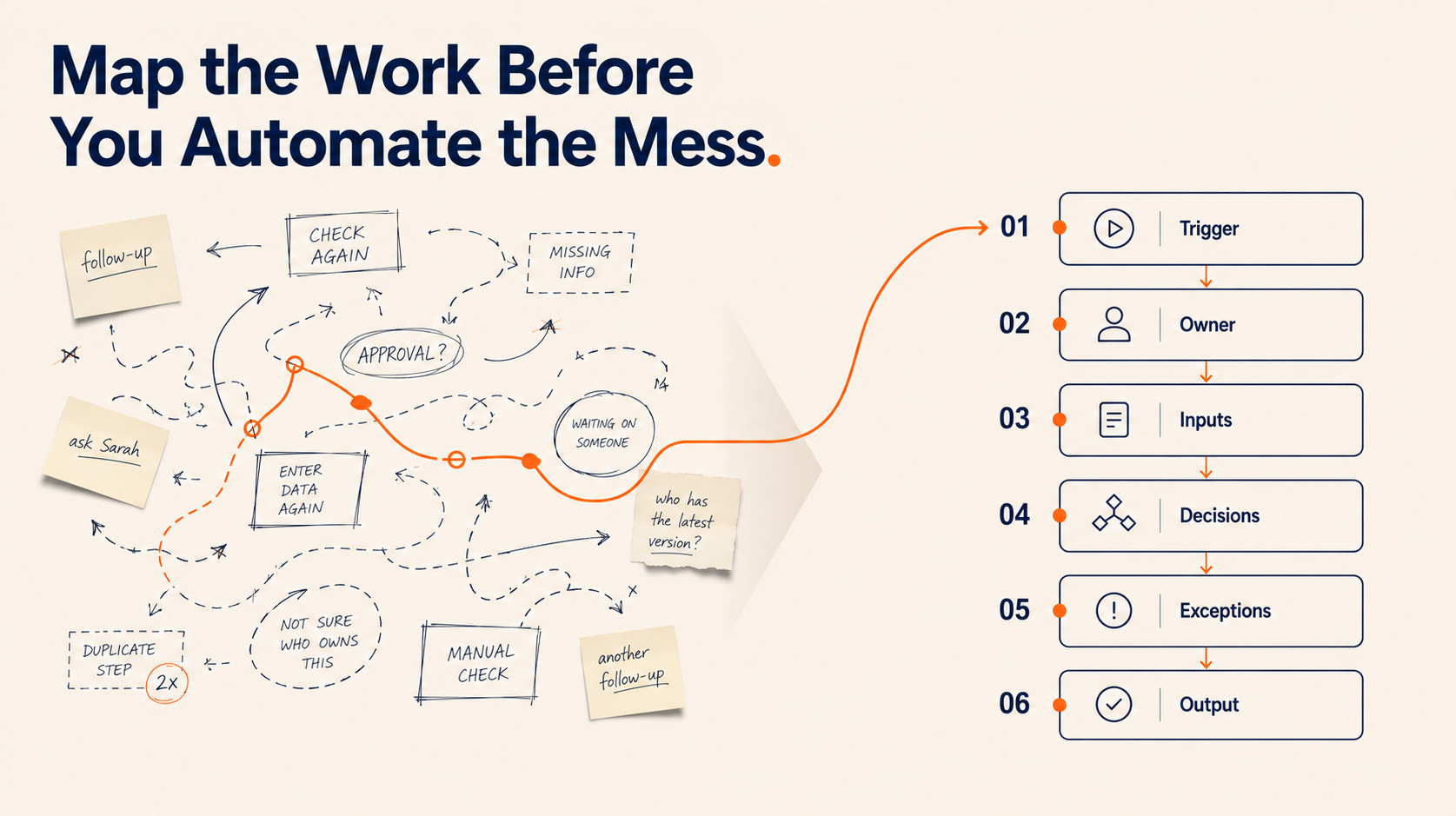
AI needs structure. It needs triggers, inputs, decision rules, ownership, exceptions, and outputs. When those pieces are missing, the automation does not become intelligent. It becomes expensive guesswork.
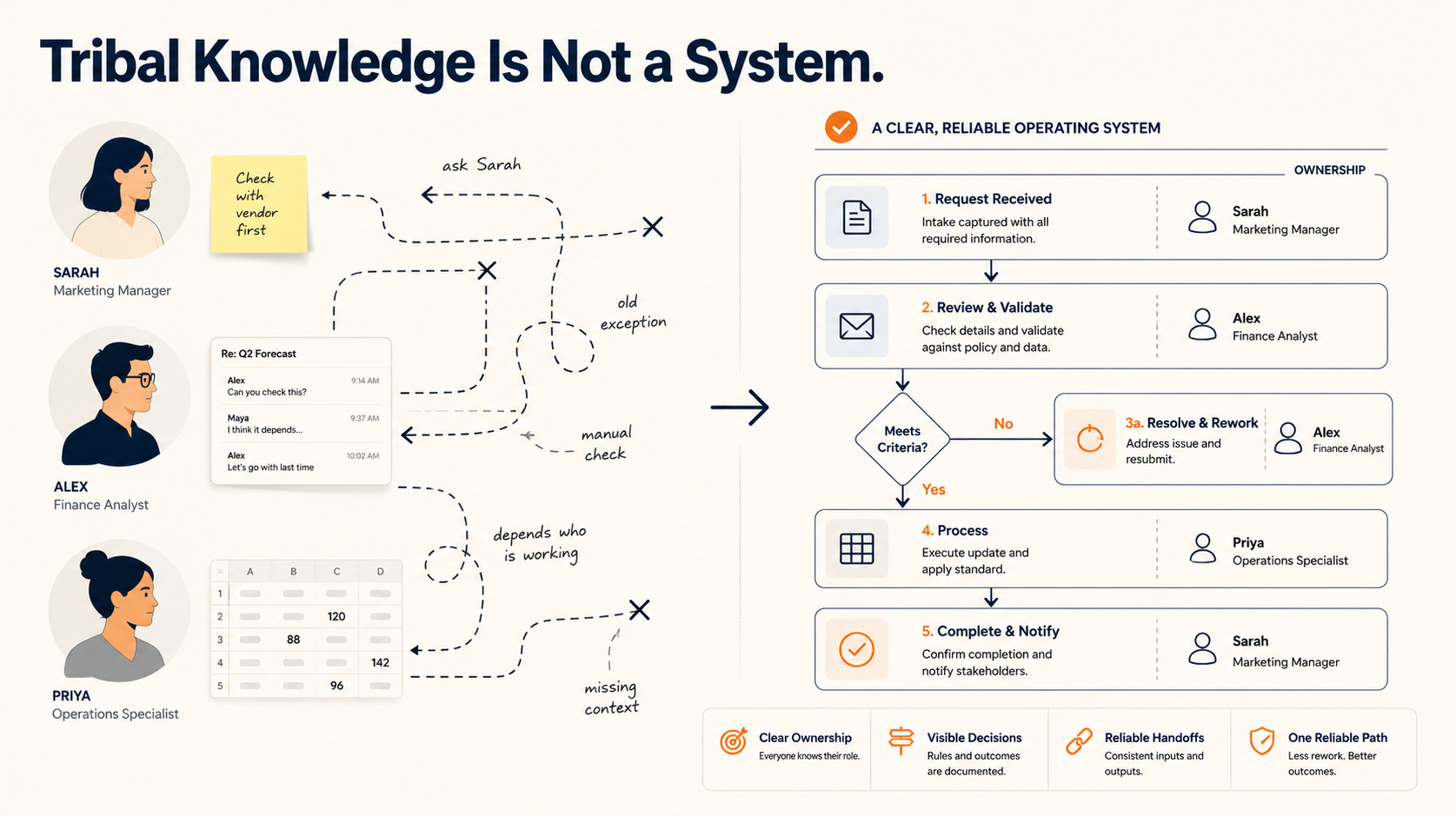
Undocumented handoffs are especially brutal. One person qualifies the lead one way. Another person checks the quote differently. A third person knows which customer exceptions matter because they have been around long enough to remember the last disaster. That is not a system. That is tribal knowledge wearing a company logo.
The point is not to write bloated SOPs nobody reads. The point is to stop wasting time pretending AI can automate work the business has not had the discipline to define. If the workflow drives revenue, cost, customer experience, or delivery speed, write it down. That is doing work that matters.
The Highest-Value Automations Start With Ugly Internal Reality
The best automation candidates are usually boring: lead intake, quoting, fulfilment updates, customer support routing, weekly reporting, invoice follow-up, renewal reminders, and internal approvals. They are not flashy, but they leak time every week.
Asana’s work research has repeatedly shown that knowledge workers spend a huge share of their week on work about work instead of skilled execution. That is the operational drag AI should attack first. But it cannot attack what nobody has mapped.
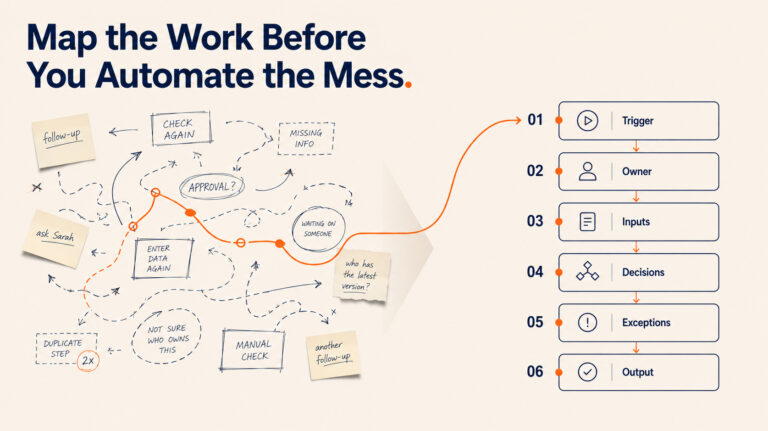
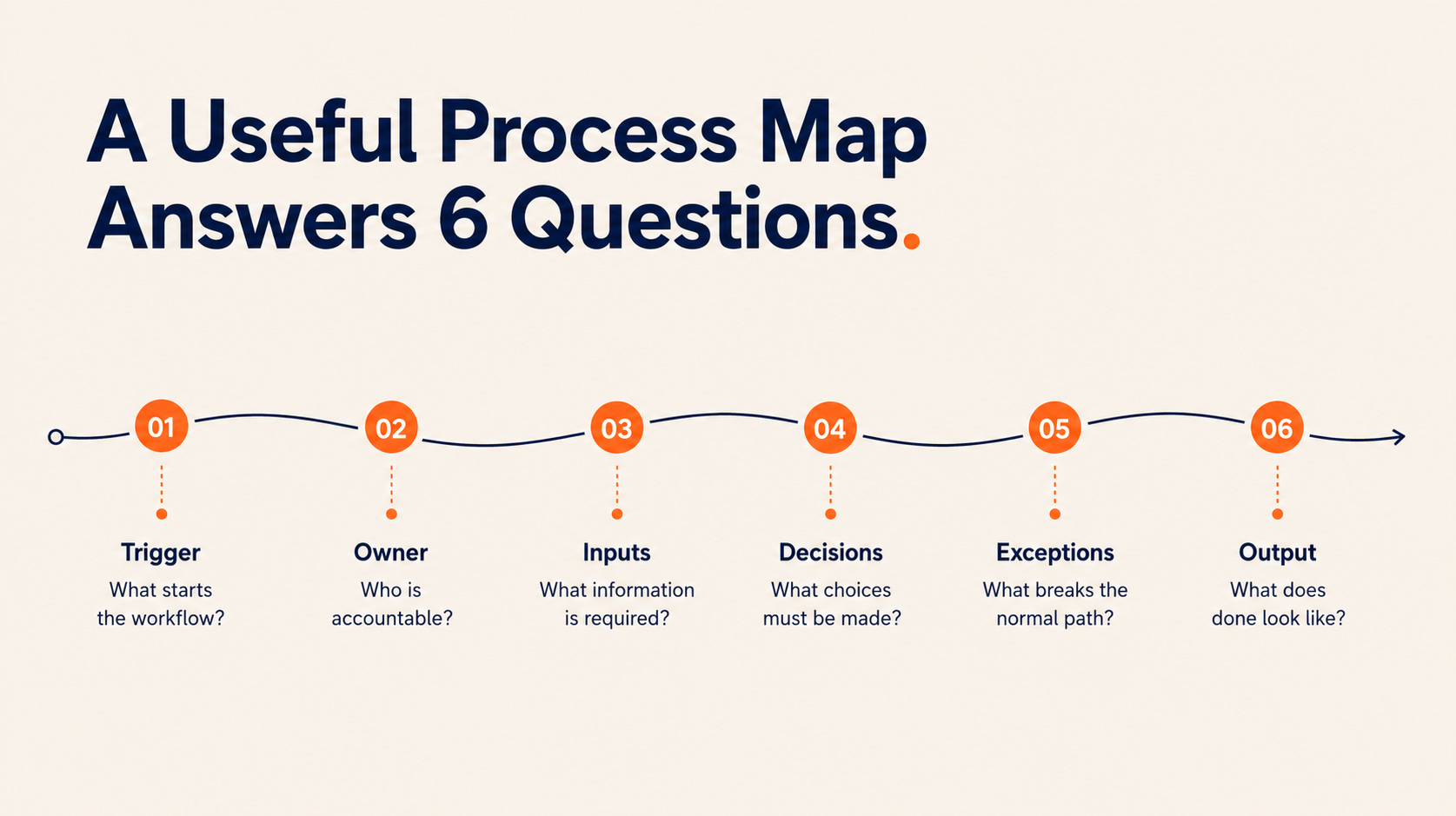
A useful process map shows where work starts, who owns it, what information is required, what decisions get made, what exceptions break the normal path, and what output counts as done. That map usually reveals the real problem before a single automation is built.
Maybe the intake form is missing the data quoting needs. Maybe approvals are duplicated because nobody trusts the first review. Maybe support tickets are being reclassified three times because the categories are vague. Maybe reports take hours because three systems disagree and nobody owns the source of truth.
That is the work. Not the demo. Not the AI hype. The work is finding the drag, defining the handoff, and building a system that removes the waste.
Documentation Does Not Need To Be Corporate Theatre
Gartner has estimated that poor data quality costs organisations an average of $12.9 million per year. Smaller businesses may not wear that full number, but they absolutely feel the same pattern: bad inputs create rework, delays, customer friction, and avoidable labour.
The answer is not a 40-page SOP binder that dies in a shared drive. That is theatre. The standard should be lean and useful:
-
Trigger: what starts the workflow?
-
Owner: who is accountable?
-
Inputs: what information is required?
-
Decision points: what choices must be made?
-
Exceptions: what breaks the normal path?
-
Output: what does done look like?
That is enough to automate, delegate, or improve a workflow without turning the business into a documentation museum. The goal is not paperwork. The goal is operational clarity.
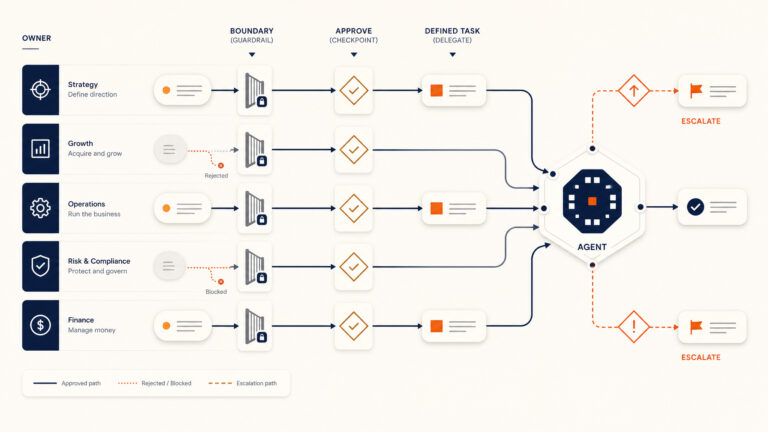
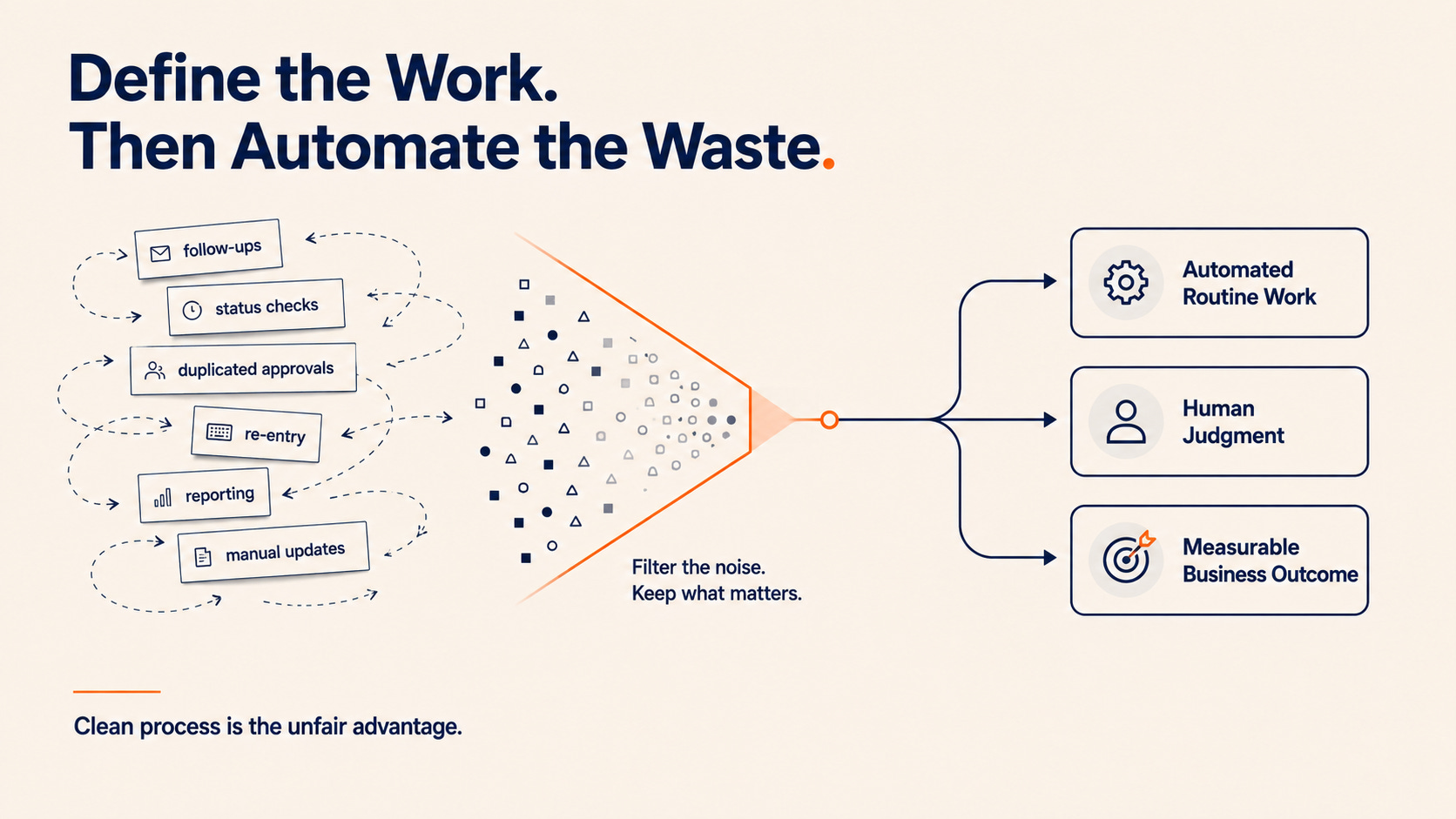
AI performs better when the business knows what good looks like. That means clean source data, defined review points, and clear rules for when humans need to step in. Without that, the company is not implementing AI. It is outsourcing confusion to software.
Clean Process Is The Unfair Advantage
Microsoft’s 2024 Work Trend Index found that 68 percent of people struggle with the pace and volume of work. That is exactly why AI adoption is tempting. Leaders see overloaded teams and assume automation will create capacity.
It can, but only if the process is clean enough to automate. Otherwise, AI becomes another layer of work. Another tool to check. Another output to review. Another exception to manage.
The companies that win with AI will not be the ones with the biggest tool stack. They will be the ones disciplined enough to define the work before they automate it. They will know which workflows matter, which inputs are reliable, which decisions require judgement, and which handoffs need to disappear.
That is the real advantage. Not being more excited about AI. Being less tolerant of operational mess.
Map The Work Before You Automate The Mess
If your business wants to use AI, start with one workflow that already matters. Not five. Not the whole company. One workflow where wasted time, slow response, duplicated effort, or inconsistent decisions are costing you something real.
Write down the trigger, owner, inputs, decisions, exceptions, and output. Then decide what should be automated, what should be delegated, and what still needs human judgement.
That is where AI starts becoming useful. Not as a toy. Not as a trend. As a practical system that gives the team time back and protects the work that actually moves the business.
If you are looking at AI but your internal workflows are still half-remembered, half-documented, and held together by follow-ups, you do not have to untangle it alone. I help SMBs map messy processes and turn them into practical AI-enabled systems. Start with the work that matters, then automate the part that should not be wasting your team’s time. Visit JC Labs to get started.